At the End
of the Corridor.
An empty chair moves closer each time I look away.
Final film
Performance, filming and editing: ZHAI BOWEN. Sound effects: CapCut library.
The sections below record my original plan. Some details changed in the finished edit.
Concept
I wake up in a corridor I do not recognise. As I look for help, an empty chair changes position whenever I look away. I want the audience to feel afraid of something they cannot see or explain.
Why a chair?
I chose a chair because it feels strange and scary when an everyday object seems to move on its own. It is also easier to film alone. I can move the chair between takes and use editing to make it look as if it has moved by itself.
Story outline
I wake up on the cold floor. The lights are on, and I hear a low hum from the ventilation. At the end of the corridor, there is a closed door and an empty chair with its back facing me.
I walk towards the door and raise my hand as if I am about to knock. Before I reach it, I hear a chair scraping behind me. I turn around. The chair is now in the middle of the corridor, facing me. Nobody is there.
I turn back to the door. I want to ask for help, but I say nothing. I hear another scrape, closer this time. When I turn again, the chair is only two steps away. I freeze.
The hum stops. I hold my breath, and the screen cuts to black. One last scrape sounds very close. Then the opening shot returns: I am on the floor, slowly opening my eyes. The chair is now beside my head, but I have not noticed it. The hum returns.
The ending
I want the fear from the dream to feel real, even after the character seems to wake up. The chair beside my head suggests that waking up has not made me safe. I want the audience to feel that the nightmare will never end and there is no way out.
Expected challenge
I think the hardest part will be making the cuts between shots feel smooth. I want the shots to fit together naturally when I edit the film.
In past editing projects, some shots did not cut together well. I sometimes added transition effects, or just left the cuts as they were. Later, I felt that some of these effects made the scene less effective, especially in horror films.
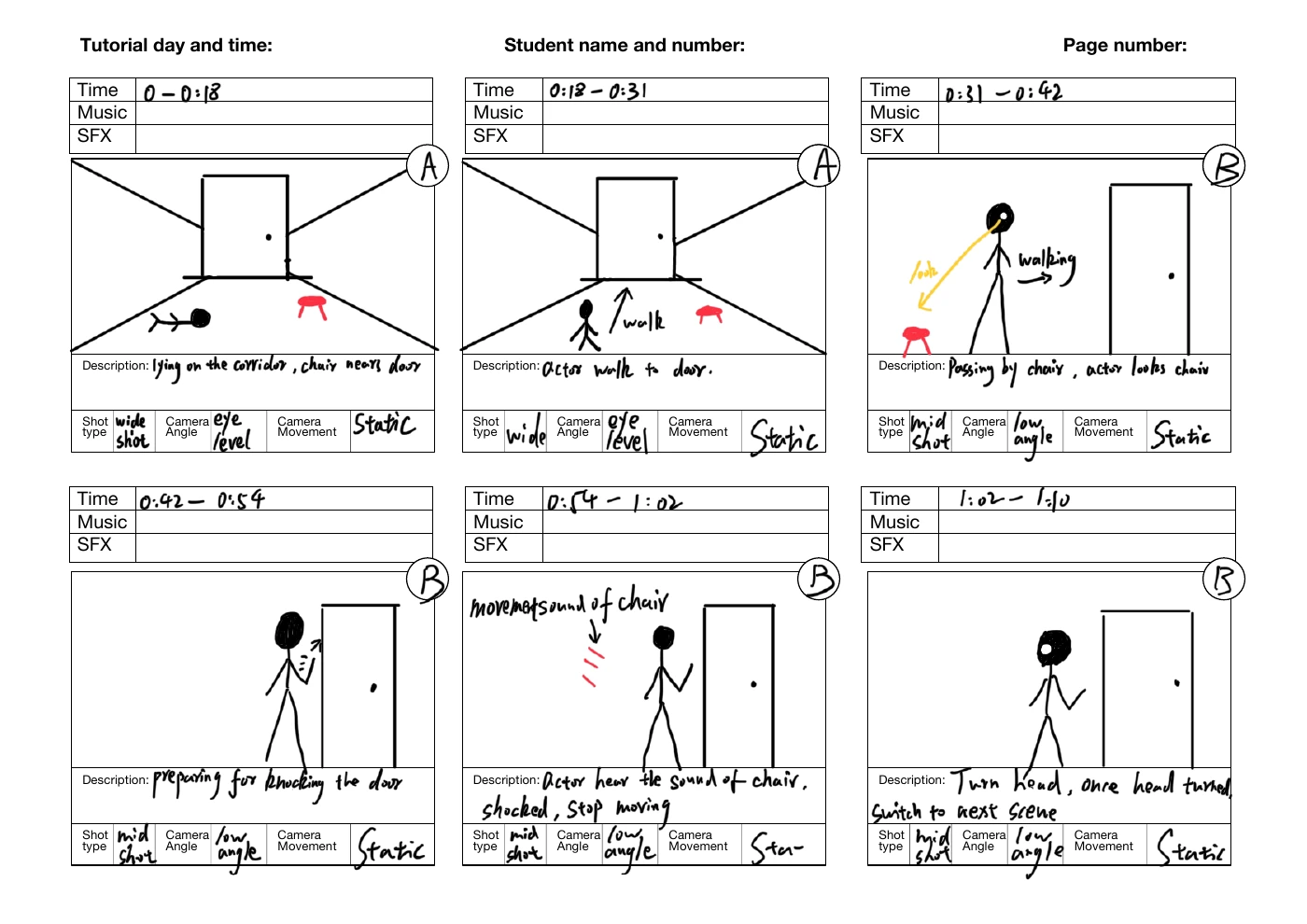
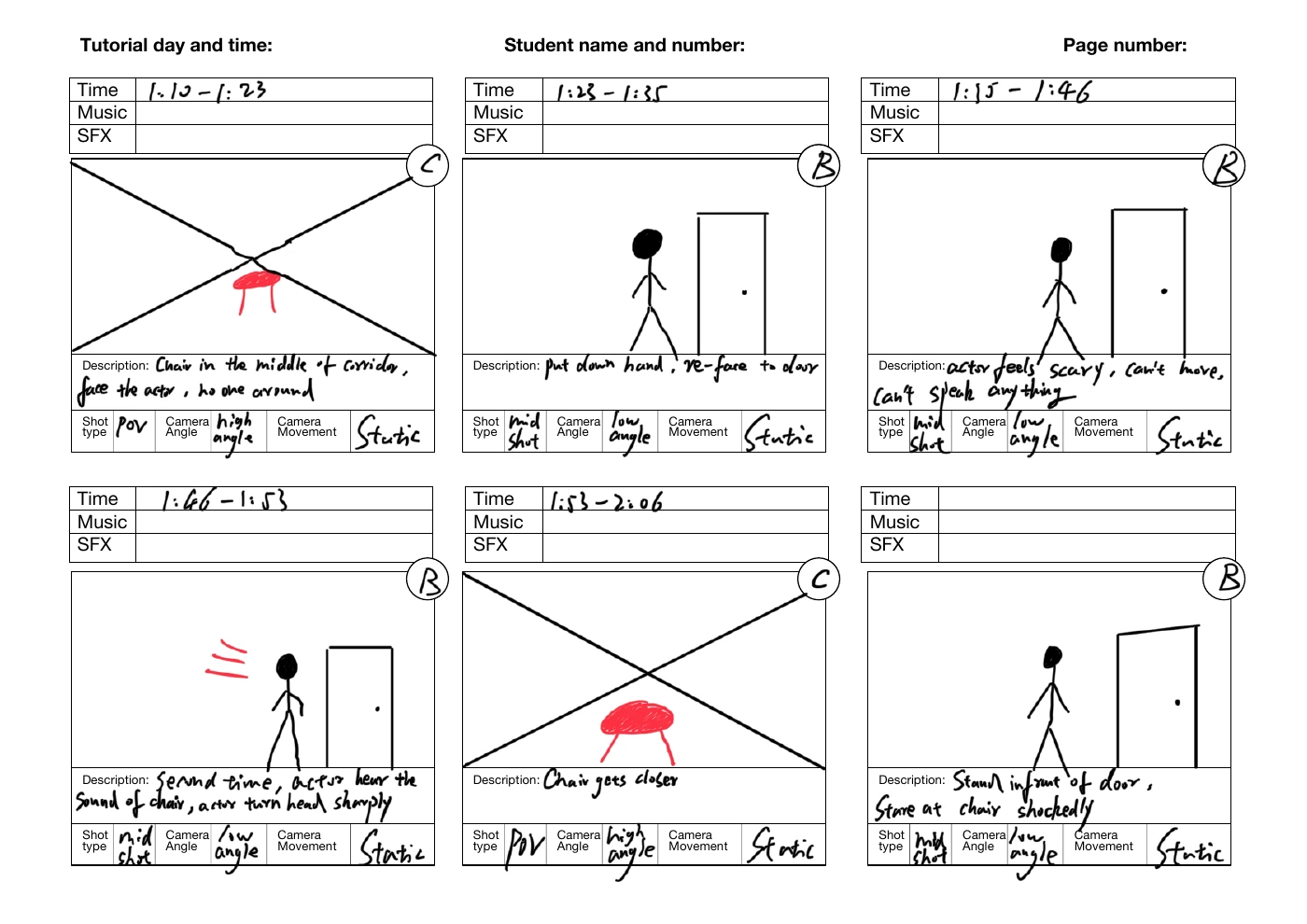
I drew a storyboard before filming to plan the camera positions and cuts. View the two-page storyboard (PDF).
Camera & sound
I will use fixed shots so the audience has time to look around the corridor. The chair will only change position between shots. I will cut between my reaction and the chair to suggest that it has moved. The first and last shots will use the same framing, making the dream seem to start again.
The main sounds will be the ventilation hum, footsteps, breathing and the chair scraping. Near the end, the hum will stop suddenly. I want the silence to make the next sound more frightening. No creature will appear, and the film will not explain why the chair moves.
Filming plan
I acted and filmed in an apartment corridor, using a phone, a tripod and a chair. The shots below describe my original filming plan.
A wide shot showing the corridor.
A medium shot of me near the door.
A point-of-view shot showing the chair from my character’s position.
I will film all the shots from each camera position together and move the chair between takes. I will raise my hand towards the door without touching, knocking on or opening it. I will record the scraping sounds separately in a suitable place and add them during editing. I will keep the shared corridor clear for other people.
Storyboard
This two-page storyboard shows my plan for the corridor, door and changing chair positions. Some details changed during filming and editing.
Open the full storyboard (PDF) →
The finished film is available above and on the Selected Work page.